
There’s a quiet truth in the nonprofit world: people don’t just fund projects, they fund trust.
And trust isn’t built once. It’s built consistently, in small, thoughtful moments of communication.
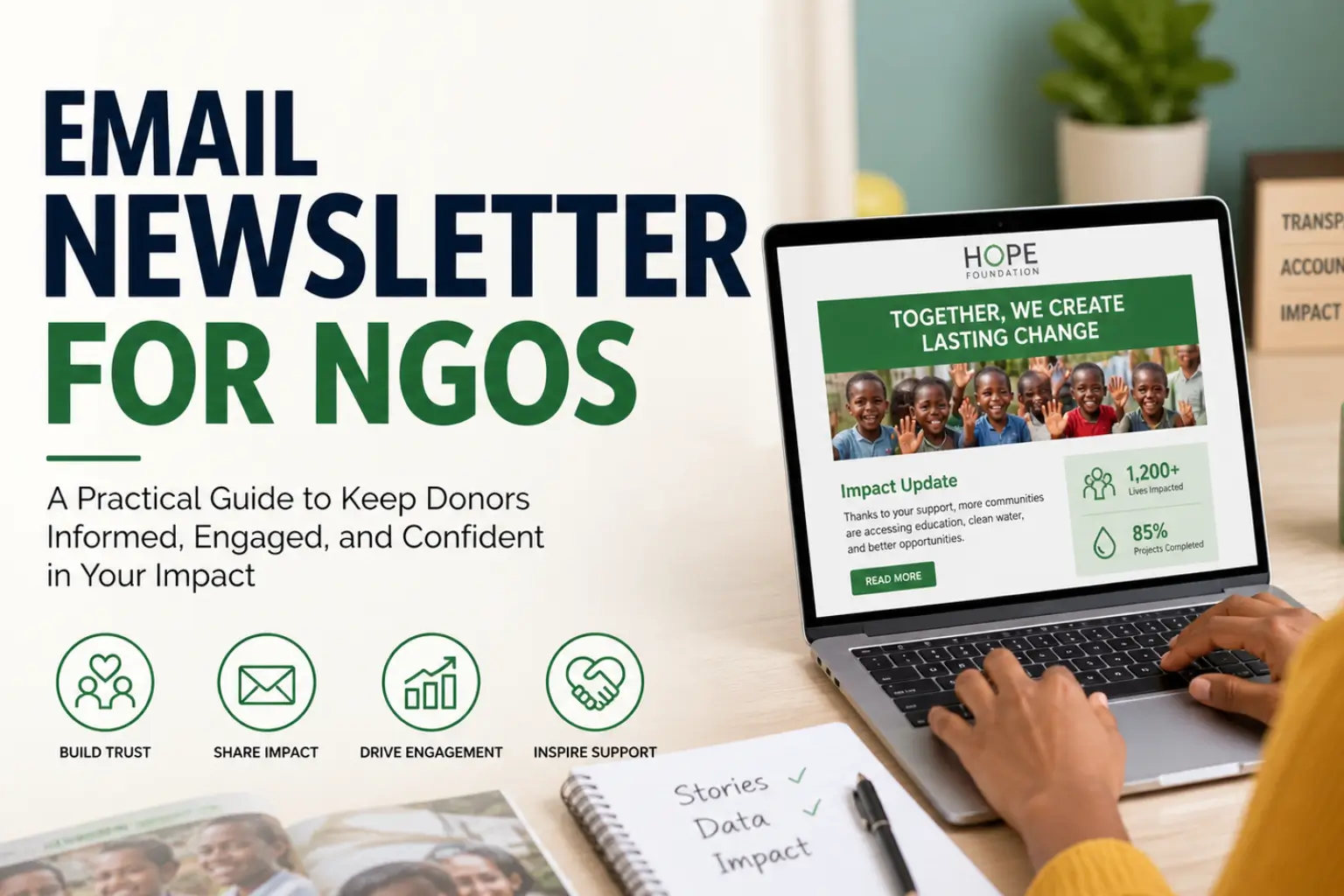
For many Kenyan NGOs, the Email Newsletter for NGOs has become that moment—a simple but powerful way to show donors what’s happening on the ground, why it matters, and how their support is making a difference.
But not all newsletters work. Some get ignored. Others feel rushed, overly technical, or disconnected from real impact.
The ones that succeed? They feel human. They tell stories. They respect the reader’s time.
Here’s how to create one.
Start With Clarity, Not Content
Before you write a single word, ask yourself: Why are we sending this?
Is it to:
- Share progress?
- Reinforce donor confidence?
- Highlight a breakthrough moment?
- Invite further support?
The strongest newsletters are not trying to say everything. They are clear about one main idea—and build around it.
Structure Matters More Than You Think
Most people won’t read your newsletter from top to bottom. They’ll scan it.
So your job is to guide the eye—and make every section count.
A Simple Flow That Works
1. Subject Line: Earn the Open
Forget cleverness for a moment—focus on relevance.
- “What your support made possible this month”
- “A small story with a big impact”
If it feels honest, it works.
2. Opening Note: Set the Tone
A short message from a team lead or director goes a long way
Not a report. Not a speech. Just a human note.
Something like:
“This month, we saw something remarkable…”
Keep it brief. Make it real.
3. The Story: Where Everything Comes Together
This is the heart of your Email Newsletter for NGOs.
Forget broad statements. Focus on one person, one moment, one outcome.
Instead of:
“We reached 500 farmers.”
Try:
“When James planted his first drought-resistant crop, he wasn’t sure it would survive. Three months later, he harvested more than he had in years.”
That’s what people remember.
4. The Updates: Keep It Light, Keep It Clear
Not everything needs a paragraph.
Use short highlights:
- New partnership secured
- Training sessions completed
- Community outreach expanded
Think of this section as a quick snapshot—not a full report.
5. The Numbers: Show the Proof
Impact needs evidence.
But don’t overwhelm. A few strong numbers are enough:
- 1,200 households reached
- 300 youth trained
- 85% project completion
Let the data support the story—not replace it.
6. The Ask: Be Clear About What Comes Next
Every newsletter should lead somewhere.
- Read more
- Join an event
- Support a campaign
Make it simple. Make it visible.
7. The Close: Say Thank You—and Mean It
Gratitude shouldn’t feel like a formality.
It should feel like recognition.
Because behind every metric is someone who chose to believe in your work.
Get the Balance Right
A good Email Newsletter for NGOs doesn’t lean too far in one direction.
If it’s all numbers, it feels cold.
If it’s all stories, it feels ungrounded.
The balance usually looks like this:
- Stories that connect
- Updates that inform
- Data that proves
- Actions that invite
When those four elements work together, the newsletter works.
Tone Is Everything
You don’t need to sound like a corporate report.
In fact, you shouldn’t.
The most effective NGO newsletters sound:
- Calm, not dramatic
- Clear, not complex
- Honest, not polished to perfection
People can tell when something is over-written.
Write the way you would speak—just a little more structured.
Consistency Builds Confidence
You don’t need to send a newsletter every week.
But you do need to show up consistently.
- Monthly works well for most NGOs
- Quarterly works if your updates are more spaced out
What matters is rhythm. When donors hear from you regularly, they feel connected—even from a distance.
Design: Keep It Simple
You don’t need a complicated layout.
In fact, simple works better—especially on mobile.
- One-column design
- Clear headings
- Short paragraphs
- Strong images (but not too many)
Your goal isn’t to impress. It’s to be understood.
Make It Personal (Even at Scale)
A small touch of personalization can change everything.
- Use first names where possible
- Segment your audience if you can
- Speak directly, not generally
Even in a mass email, people should feel like you’re talking to them, not at them.
Measure What Matters
You don’t need to track everything—but you should track enough.
Look at:
- Open rates
- Clicks
- Engagement over time
Not to chase numbers—but to understand what resonates.
When It Becomes Too Much
Here’s the reality: many NGOs don’t have the time—or internal capacity—to do this consistently.
Writing, designing, scheduling, analyzing—it adds up.
And when communication becomes rushed, it shows.
This is where working with a partner like Savvyscope Media Solutions can make a difference. For NGOs that don’t have in-house communications teams, having external support means your newsletters don’t just go out—they actually work.
From shaping the narrative to refining the design and tracking performance, the right support allows your team to stay focused on impact—while your communication reflects it properly.
Final Thought
An Email Newsletter for NGOs is not just an update.
It’s a conversation.
A quiet, ongoing conversation between your work and the people who believe in it.
When done well, it builds something far more valuable than visibility.
It builds trust.
And in this space, trust is everything.